Bulb Compatibility
LED bulbs in enclosed fixtures: read the rating first
An LED can work well behind a globe or lens, but enclosure approval is a separate requirement from socket fit, wattage, and dimmer compatibility.
Reference table
What does the enclosure wording mean?
Check the exact bulb model on its packaging or manufacturer specification sheet. These are decision rules, not ratings for a particular product. On a phone, swipe the table sideways to read every column.
| Check | What you find | What to do |
|---|---|---|
| Explicitly permitted | The manufacturer identifies this model as suitable for enclosed fixtures. | Continue checking base, dimensions, voltage, actual watts, controls, and moisture ratings. |
| Explicitly prohibited | The model instructions say not to use it in an enclosed fixture. | Choose a model that permits enclosure use. Low wattage or a dimmable label does not override the restriction. |
| Not stated or conflicting | No enclosure information is available, or the package and specification sheet disagree. | Treat suitability as unconfirmed. Ask the manufacturer using the exact model number before installing it. |
Codes identify one part of the lamp. The fixture label and exact model specifications still control.
Why the enclosure rating matters
LED bulbs produce less waste heat than comparable incandescent bulbs, but they are not heat-free. Their LED chips and electronic driver still generate heat, which must move through the bulb and into the surrounding air. A fully enclosed fixture slows that heat transfer.
The U.S. Department of Energy explains that enclosed fixtures trap heat and can affect an LED’s performance and life expectancy. Check the manufacturer’s stated applications before using an LED behind a closed globe or lens. GE Lighting also warns that an LED without the enclosed-space rating can lose light output and have a shorter life.
What counts as an enclosed fixture?
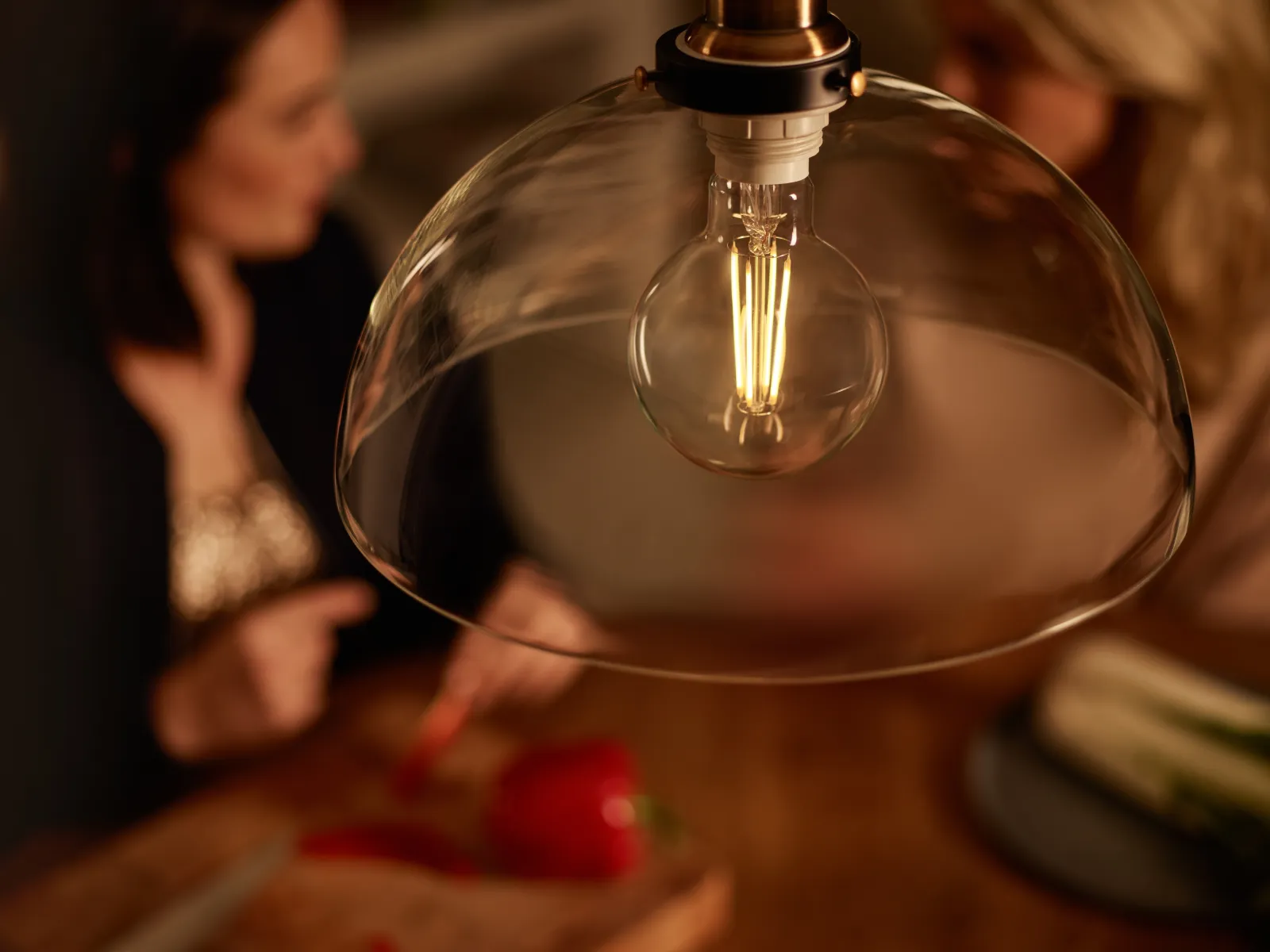
Common examples include flush-mount ceiling lights with a glass or plastic dome, sealed porch lanterns, globe fixtures, and some covered vanity or utility lights. The important feature is restricted airflow around the bulb—not whether the cover is clear, frosted, decorative, or technically airtight.
A shade open at the bottom is generally less restrictive than a globe surrounding the bulb, but appearance alone cannot establish the operating classification. If a lens or cover substantially surrounds the lamp and the fixture documentation does not settle the question, treat it as enclosed when selecting a bulb. Look for wording such as “suitable for enclosed fixtures,” “enclosed fixture rated,” or an enclosure symbol in the bulb specifications.
Six compatibility checks that remain separate
An enclosure rating answers only the heat-management question. It does not establish that the bulb is otherwise suitable. Check each of the following independently:
- Base code: Match the socket exactly—for example, E26 medium, E12 candelabra, E17 intermediate, GU10, or G9. A bulb that can be forced into an adapter is not automatically approved for the fixture.
- Bulb shape: A19, A21, G25, BR30, T-series, and other designations describe different forms or sizes. The correct base does not guarantee that the bulb fits under the cover or distributes light as intended.
- Voltage: Match the rated voltage in the fixture instructions and on the bulb. A screw base alone does not establish the supply voltage.
- Fixture rating: Follow the permitted lamp type and maximum actual wattage. The CPSC warns that a bulb above the recommended wattage can overheat the fixture, wiring, or nearby materials.
- Dimmer compatibility: A dimmable LED still must be compatible with the installed dimmer. Lutron maintains model-specific compatibility information because performance depends on the particular bulb-and-dimmer combination.
- Physical clearance: Confirm that the bulb does not touch the lens, shade, insulation, wiring, or other parts and that the cover closes without pressure on the bulb. Follow any clearances stated in the fixture manual.
Read “equivalent watts” and actual watts correctly
A package may describe a 9-watt LED as a “60-watt replacement.” That comparison describes approximate light output; it does not mean the LED consumes 60 watts. The FTC distinguishes lumens, which measure brightness, from watts, which measure energy use. Use the LED’s actual “Energy Used” wattage when comparing it with a fixture’s maximum-wattage limit, then use lumens to choose the desired brightness.
Passing the wattage check does not replace the enclosure check. A low-wattage LED marked “not for use in enclosed fixtures” remains unsuitable for a closed globe even if its actual wattage is far below the fixture maximum. Likewise, a fixture label may specify a particular lamp technology or shape; follow that restriction rather than relying on wattage alone.
How to verify a bulb before buying it
Check the package, the manufacturer’s product page, and—when available—the model-specific specification sheet. Do not infer approval from marketing terms such as “cool running,” “long life,” or “indoor/outdoor.” Manufacturer catalogs show why the exact model matters: some LEDs are enclosed-fixture rated while visually similar products are not. GE Lighting also tells users to confirm the enclosed-space rating and does not recommend its Cync smart bulbs in enclosed fixtures because their electronics may fail early from overheating.
If the package and online listing disagree, ask the manufacturer about the exact model number. Ratings can differ between visually similar products, wattages, generations, and smart versus non-smart versions.
Recessed, outdoor, and IC ratings are different issues
A recessed can is not automatically equivalent to a sealed dome, and a bulb approved for a recessed fixture is not necessarily approved for every fully enclosed fixture. Use the bulb’s stated applications and the recessed housing’s lamp restrictions.
“IC rated” belongs to the recessed luminaire or housing. It means the housing is designed for contact with building insulation; it does not grant enclosure approval to a replaceable bulb. Cooper Lighting, for example, describes its Type IC housing as suitable for direct contact with insulation.
Wet- or damp-location suitability is another independent rating. UL describes damp locations as areas subject to condensation and wet locations as places where water may drip, splash, or flow against equipment. Neither marking tells you whether a bulb can tolerate trapped heat. For a covered outdoor fixture, both the fixture and bulb must have the appropriate environmental rating, and the bulb must separately be suitable for the enclosure.
Installation and troubleshooting
Turn the fixture off and allow the old bulb to cool. Inspect the socket, cover, and fixture label before installing the replacement. Do not use a damaged socket, defeat a ventilation opening, omit a required cover, or modify the fixture to make an oversized bulb fit. Reinstall the lens or globe as the fixture manufacturer directs.
If a newly installed LED flickers, buzzes, cycles off and back on, becomes unexpectedly dim, or fails early, do not assume enclosure heat is the only possible cause. A mismatched dimmer, loose connection, control device, wrong voltage, or defective bulb can produce overlapping symptoms. Verify the bulb model, enclosure approval, dimmer compatibility, and fixture instructions. Stop using the light if you notice scorching, melting, smoke, or a persistent burning odor, and have the fixture evaluated by a qualified electrician.
Before you buy
A quick replacement check
- Find the fixture’s lamp label and model instructions
- Confirm the LED explicitly says it is suitable for enclosed fixtures
- Match the base code exactly
- Confirm the bulb shape and dimensions fit without contact
- Match the fixture and bulb voltage
- Compare the fixture limit with the LED’s actual wattage, not its replacement-wattage claim
- Confirm the fixture permits that lamp type
- Check bulb-and-dimmer compatibility whenever a dimmer is installed.
Common follow-ups
Questions people ask next
Can I put a 60-watt-equivalent LED in a fixture labeled 60 watts maximum?
Usually, provided the LED’s actual wattage is no more than the fixture limit and the fixture permits that lamp type. You must still verify the bulb’s enclosure rating, voltage, base, dimensions, and control compatibility.
Does a dimmable LED work with any dimmer?
No. The bulb must be dimmable, and the specific dimmer must support that LED model or load. Check the bulb and dimmer manufacturers’ compatibility information.
Does enclosed-fixture approval also mean the bulb is outdoor rated?
No. Enclosure suitability concerns trapped heat; damp- and wet-location ratings concern moisture exposure. A covered outdoor fixture may require both.
What if the fixture has no readable label?
Try to identify its manufacturer and model without dismantling hard-wired parts. If the permitted bulb type and wattage cannot be established, ask the manufacturer or a qualified electrician rather than guessing.
Can I use a smart LED bulb in a closed globe?
Only if that exact smart-bulb model is approved for enclosed fixtures. Smart bulbs contain additional electronics, and some manufacturers expressly advise against enclosing their models.
Checked against
Sources
- Public guidanceU.S. Department of Energy — Purchasing Energy-Efficient Light Bulbs ↗Accessed 2026-09-08
- Public guidanceFederal Trade Commission — Shopping for Light Bulbs ↗Accessed 2026-09-08
- Manufacturer documentGE Lighting — Lighting FAQ ↗Accessed 2026-09-08
- Manufacturer documentGE Lighting — Cync Light Bulbs — FAQs ↗Accessed 2026-08-14
- Manufacturer documentLutron Electronics — Bulb Compatibility Resources ↗Accessed 2026-08-14
- Manufacturer documentCooper Lighting Solutions — E750ICAT Series Recessed Housing ↗Accessed 2026-09-08
- Public guidanceU.S. Consumer Product Safety Commission — Home Electrical Safety Checklist — Check Lights ↗Accessed 2026-09-08
- Manufacturer documentUL — Luminaires Marking and Application Guide — Environmental Location Markings ↗Accessed 2026-09-08